Best Plants for Clay Soil in Missouri
If you've ever tried to dig a hole in your yard and hit something closer to pottery than dirt, you've met Missouri clay. It's the default soil across much of Farmington and St. François County, and it has a reputation for being tough to work with. The good news: with the right plants — and a little prep — clay soil grows beautiful, healthy landscapes. In fact, clay holds nutrients and moisture better than sandy soil, which is a real advantage in a dry summer.
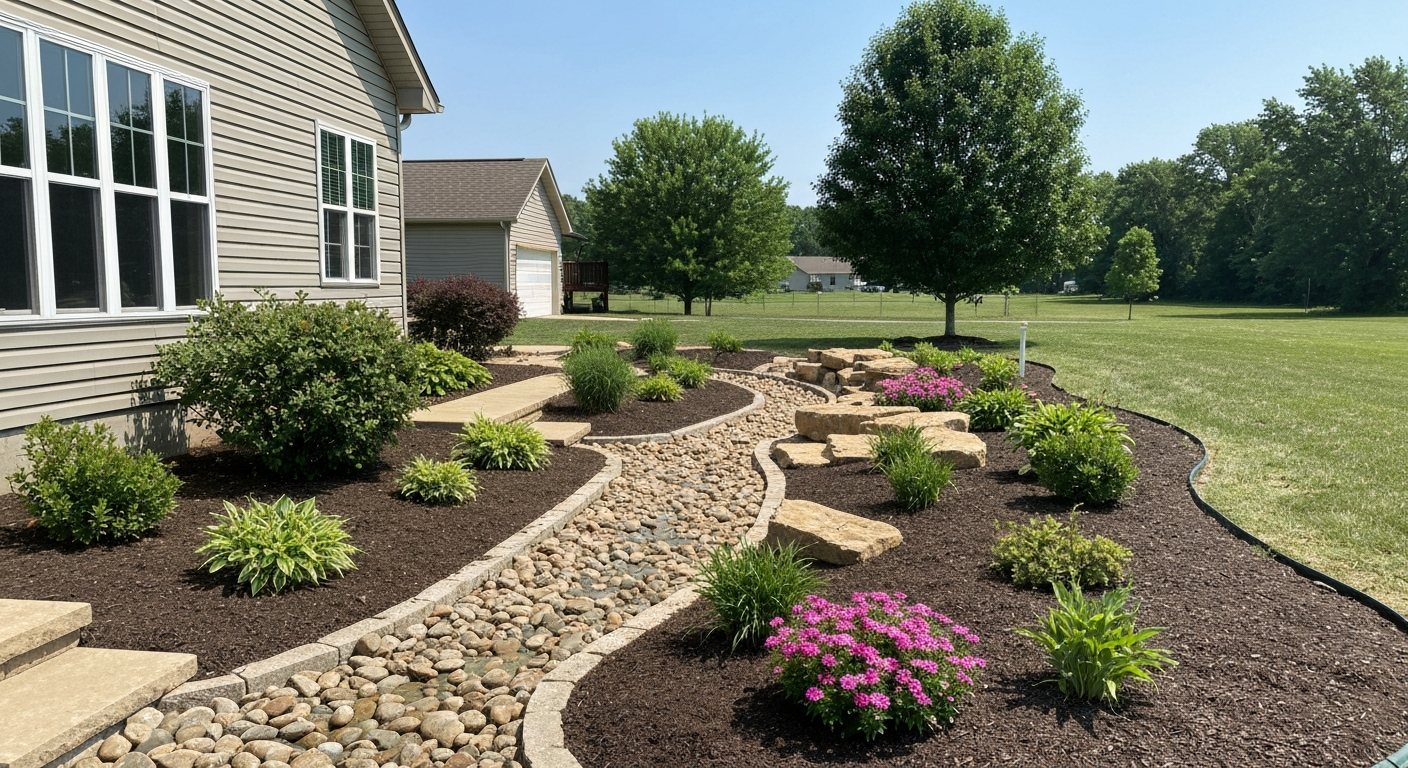
Here's how to tell what you're working with, how to improve it, and which plants actually love it.
How to Tell If You Have Clay Soil
A couple of quick checks:
- The ribbon test. Grab a handful of moist soil and roll it between your fingers. If it forms a smooth, bendable ribbon, you've got a lot of clay.
- The puddle test. After a good rain, does water sit on the surface for hours (or days)? Clay drains slowly, so standing water and slow-to-dry low spots are classic signs.
- The crack test. In a dry spell, clay shrinks and the surface cracks. In wet weather it swells and turns sticky.
If that sounds like your yard, you're in clay country — along with most of your neighbors.
The Two Ways to Win With Clay
You have two strategies, and the best landscapes usually use both:
- Improve the soil so a wider range of plants can thrive.
- Choose plants that already love clay so you're working with the site, not against it.
Improving Clay Soil
- Add organic matter — lots of it. Compost, leaf mold, and aged manure worked into the top several inches loosen clay over time and feed soil life. This is the single most effective thing you can do.
- Don't just add sand. Sand mixed into clay without enough organic matter can set up almost like concrete. Skip the shortcut.
- Consider raised or bermed beds. Building up the planting area a few inches improves drainage instantly and saves you from fighting the clay below.
- Never work clay when it's wet. Digging or tilling soggy clay destroys its structure and leaves you with hard clods. Wait until it's just barely moist.
- Mulch and let it ride. A good mulch layer keeps the surface from baking hard and slowly adds organic matter as it breaks down.
Choosing Clay-Tolerant Plants
Many of our favorite Missouri natives are naturally clay-tough. Here's a reliable starting palette:
| Type | Plant | Notes |
|---|---|---|
| Perennial | Black-Eyed Susan, Purple Coneflower | Sun-loving, unkillable, long bloom |
| Perennial | Bee Balm, Joe-Pye Weed | Great for damp clay; pollinator favorites |
| Perennial | Daylily, Sedum, Coreopsis | Forgiving color that shrugs off heavy soil |
| Perennial | New England Aster, Goldenrod, Liatris | Strong fall interest, deep roots |
| Grass | Switchgrass, Little Bluestem, Prairie Dropseed | Native grasses that anchor clay beds |
| Shrub | Ninebark, Chokeberry (Aronia), Viburnum | Tough structure shrubs with multi-season interest |
| Shrub | Red-Twig Dogwood, Summersweet, Buttonbush | Excel in wetter clay and low spots |
| Tree | River Birch, Bald Cypress, Swamp White Oak | Built for heavy, sometimes-wet ground |
| Tree | Red Maple, Hackberry, Honeylocust | Adaptable shade trees that handle clay |
Notice a theme: a lot of these are the same plants that handle wet feet, because clay and poor drainage tend to go hand in hand.
Fix the Drainage First
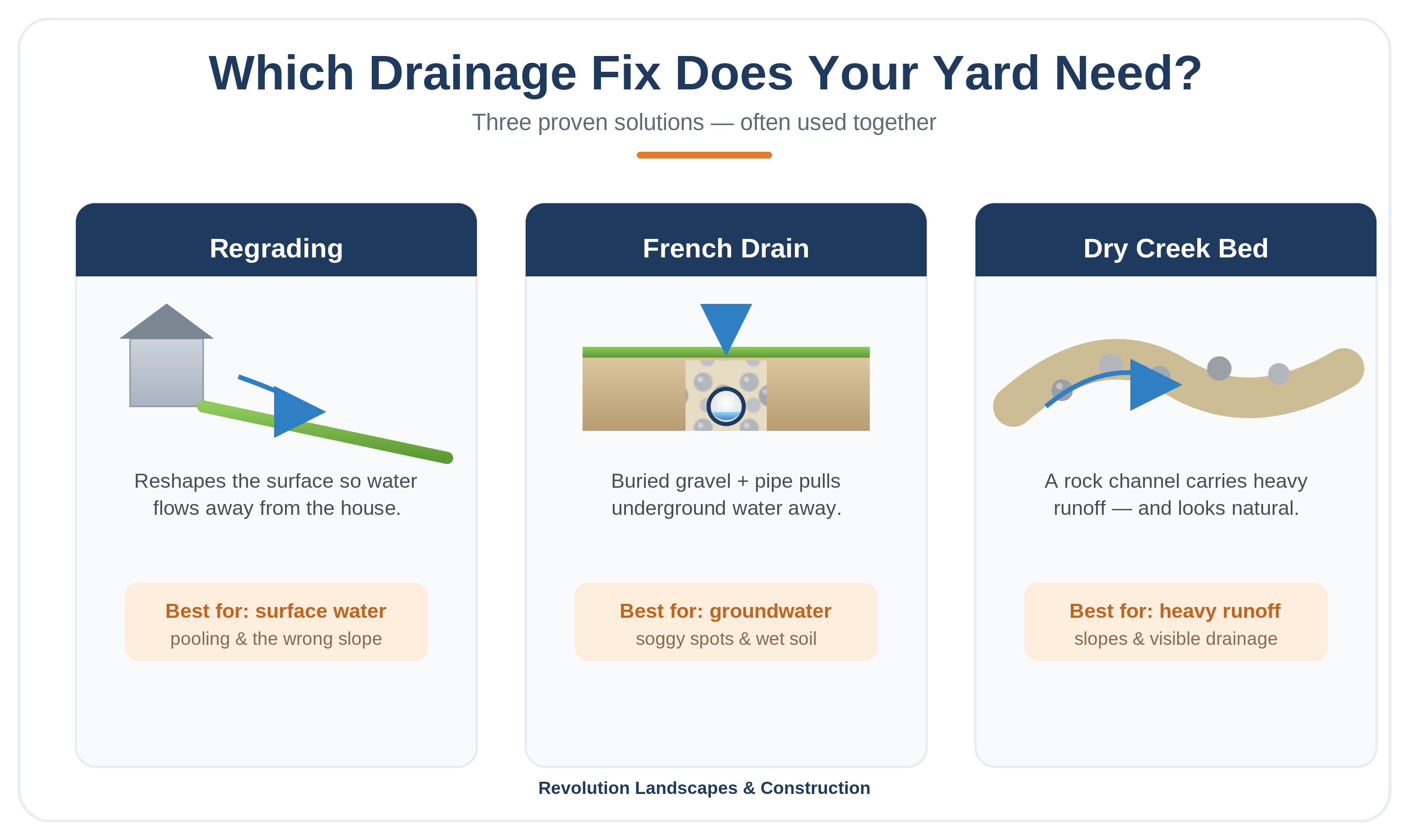
Here's the part homeowners often miss: even clay-loving plants will struggle — or rot — if water has nowhere to go. If your yard has spots that stay soggy for days, the smartest move is to solve the water problem before you plant.
That can mean regrading to move water away from the house, a French drain to carry it off, or routing downspouts to better outlets. We cover the full range in our drainage solutions, and the diagram above shows the common options side by side.
Solve drainage first, plant clay-tolerant species second, and you've removed the two biggest reasons clay-soil landscapes fail.
Let Us Build the Plan
Working with clay is as much about prep and grading as it is about plant choice — which is exactly what we do in landscape design, full-service landscaping, and lawn renovation. We'll test what you're working with, fix any drainage issues, amend where it counts, and choose plants that will thrive for years.
Frequently Asked Questions
Related Services & Areas
Tired of fighting your clay soil?
Revolution Landscapes builds healthy, thriving landscapes on Missouri clay — soil prep, drainage, and the right plants, all handled.
Request a consultation