How to Fix Standing Water in Your Yard in Farmington, MO
Standing water after a rain isn't just annoying — in Farmington's clay soil it drowns grass, breeds mosquitoes, and can work its way toward your foundation. Here's how to figure out what's wrong and fix it for good.
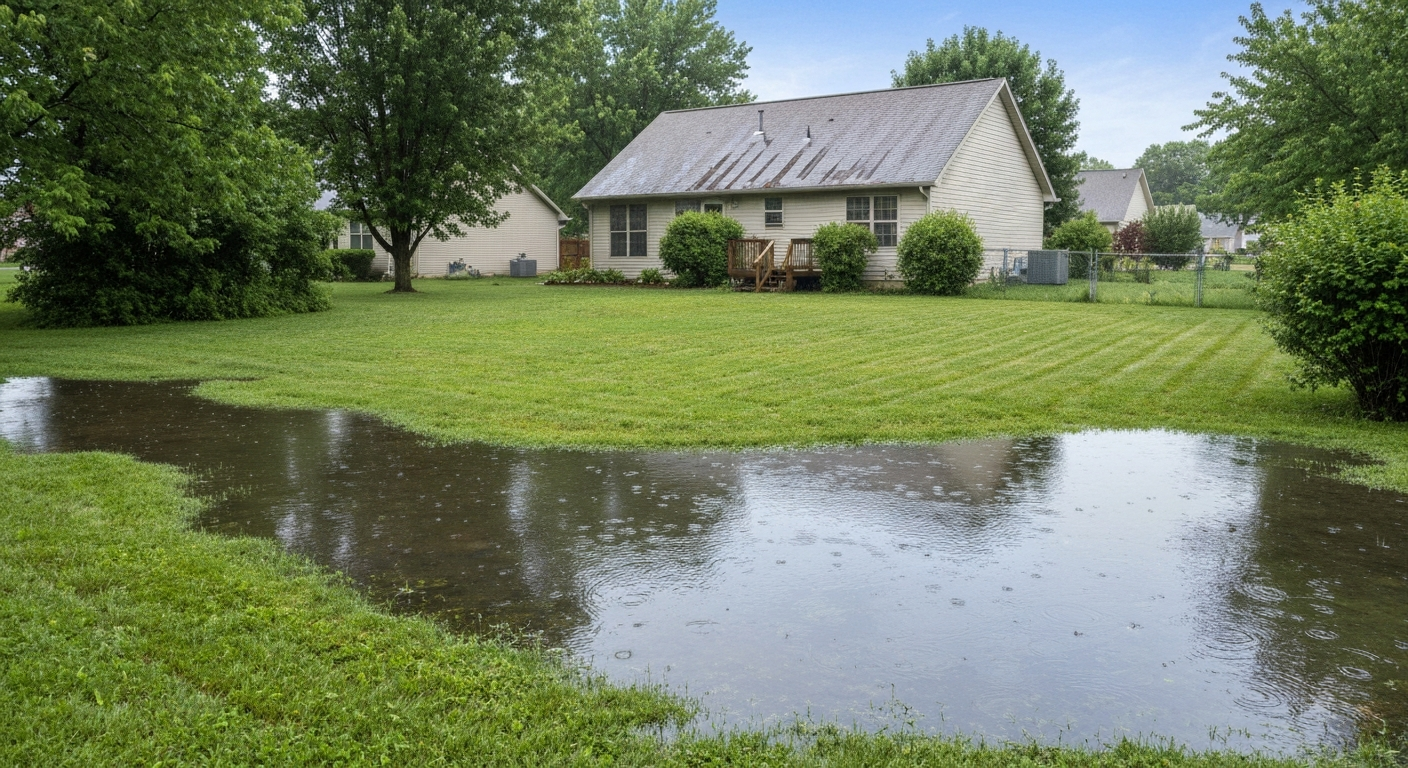
Why Farmington Yards Hold Water
If you live in Farmington or the surrounding Parkland, you're likely sitting on heavy clay soil. Clay is dense and holds onto water instead of letting it percolate down. When you combine that with poor grading — where the ground slopes toward your house or flat spots trap runoff — you get standing water. Another major culprit? Downspouts that dump hundreds of gallons of roof runoff directly next to the foundation or into a low spot in the yard, overwhelming the soil's ability to absorb it.
5 Signs You Have a Real Drainage Problem
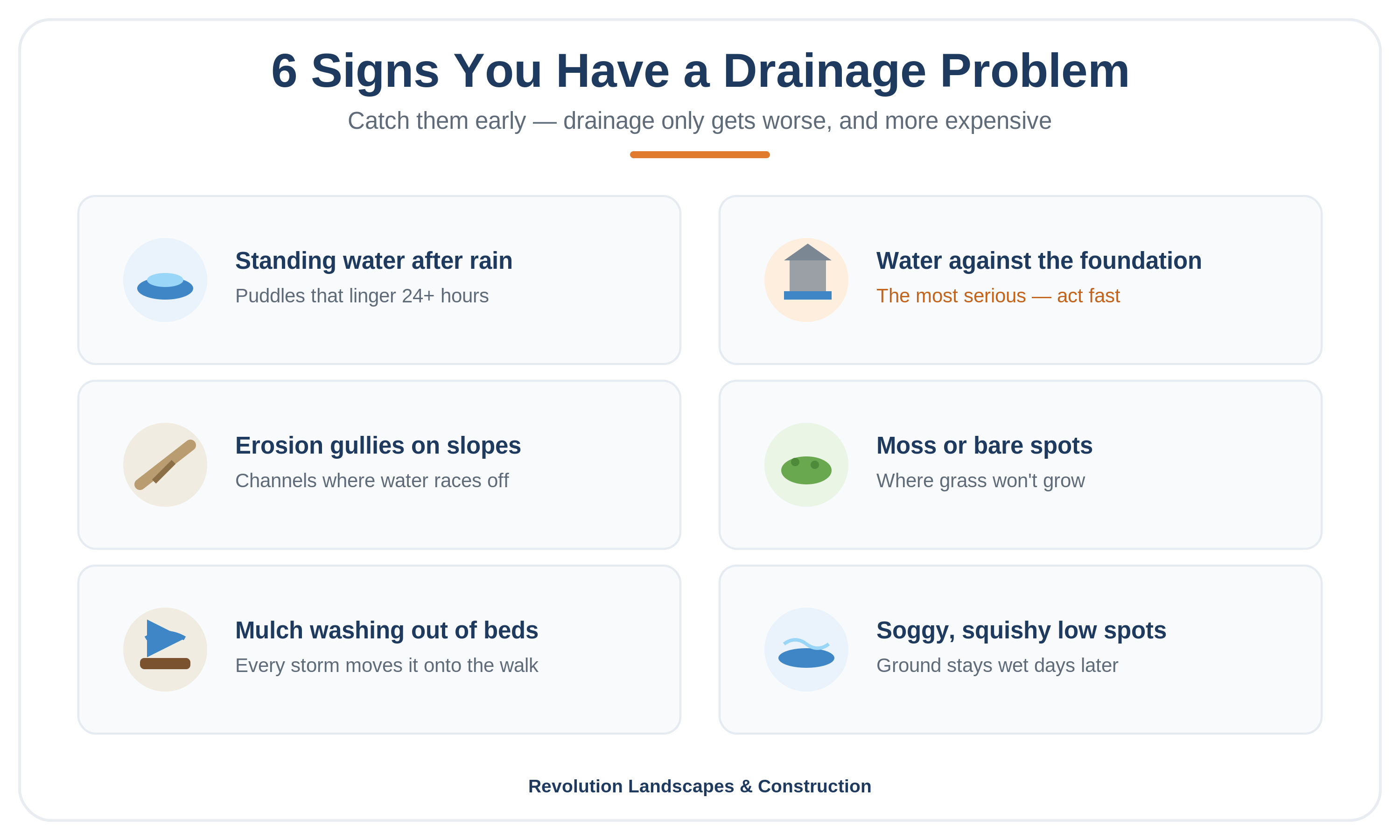
How do you know if it's just a heavy storm or a chronic drainage issue? Look for these five signs:
- Water stands for 24+ hours: If puddles remain a full day after the rain stops, your soil isn't draining.
- Water pooling against the foundation: The most dangerous sign, leading to basement leaks and structural damage.
- Erosion gullies: Deep washouts in your mulch beds or lawn where water channels away too fast.
- Moss or bare spots: Areas where grass refuses to grow and moss takes over because the ground is constantly soggy.
- Mulch washing out: Every storm pushes your landscaping mulch out of its beds and onto the sidewalk.
Quick Checks You Can Do Yourself
Before you assume the worst, check the basics. Walk your property during a heavy rain (or right after). Watch where the water flows from the downspouts. Are they clogged? Are they dumping water right at the base of the house? Next, look at the ground around your foundation — it should slope away from the house, dropping at least 6 inches over the first 10 feet. If the ground is flat or slopes back toward the siding, that's a grading issue you need to address immediately.
The Fixes That Actually Work
Fixing yard drainage means moving water from where it is to where it should be. The most common and effective solutions include:
- French Drains: A gravel-filled trench with a perforated pipe that catches groundwater and channels it away. Perfect for soggy low spots.
- Regrading: Reshaping the soil so water naturally flows away from the house and off the property, sometimes supported by retaining walls on steep slopes.
- Dry Creek Beds: A surface-level channel lined with decorative rock that handles heavy surface runoff while looking like a natural landscaping feature.
- Downspout Extensions: Piping roof runoff underground and discharging it safely away from the foundation.
When to Call a Pro
While slapping a plastic extension on a downspout is a DIY job, real drainage work — like installing a French drain or regrading a yard — requires proper slope calculations, heavy equipment, and knowing where utility lines are buried. If water is pooling against your foundation, don't wait. Ignoring it can lead to five-figure foundation repairs. Call a professional to diagnose the root cause and build a solution that lasts.