French Drain vs. Regrading: Which Does Your Yard Actually Need?
Both fix wet yards, but they solve different problems. Picking the wrong one wastes money and leaves the water. Here's how to tell which your yard needs.
What Regrading Does
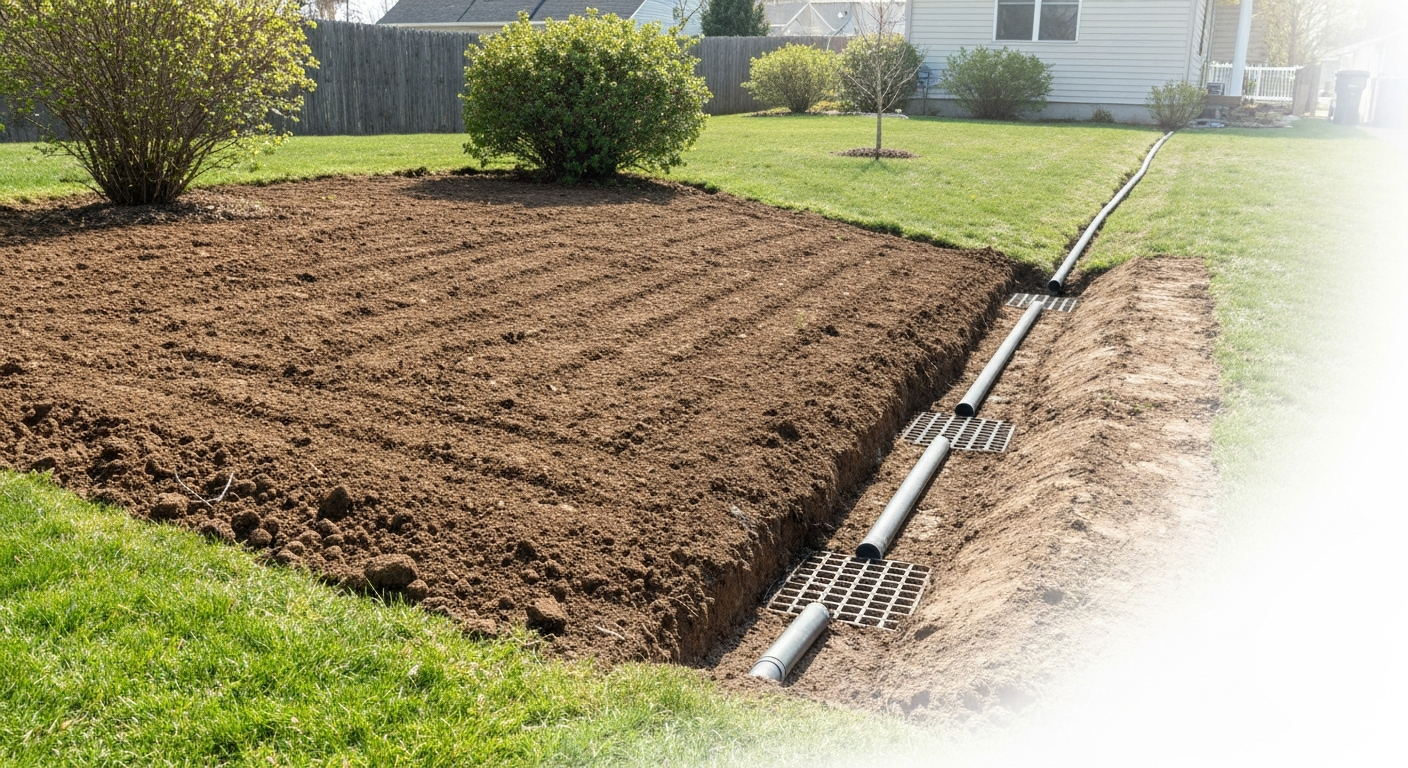
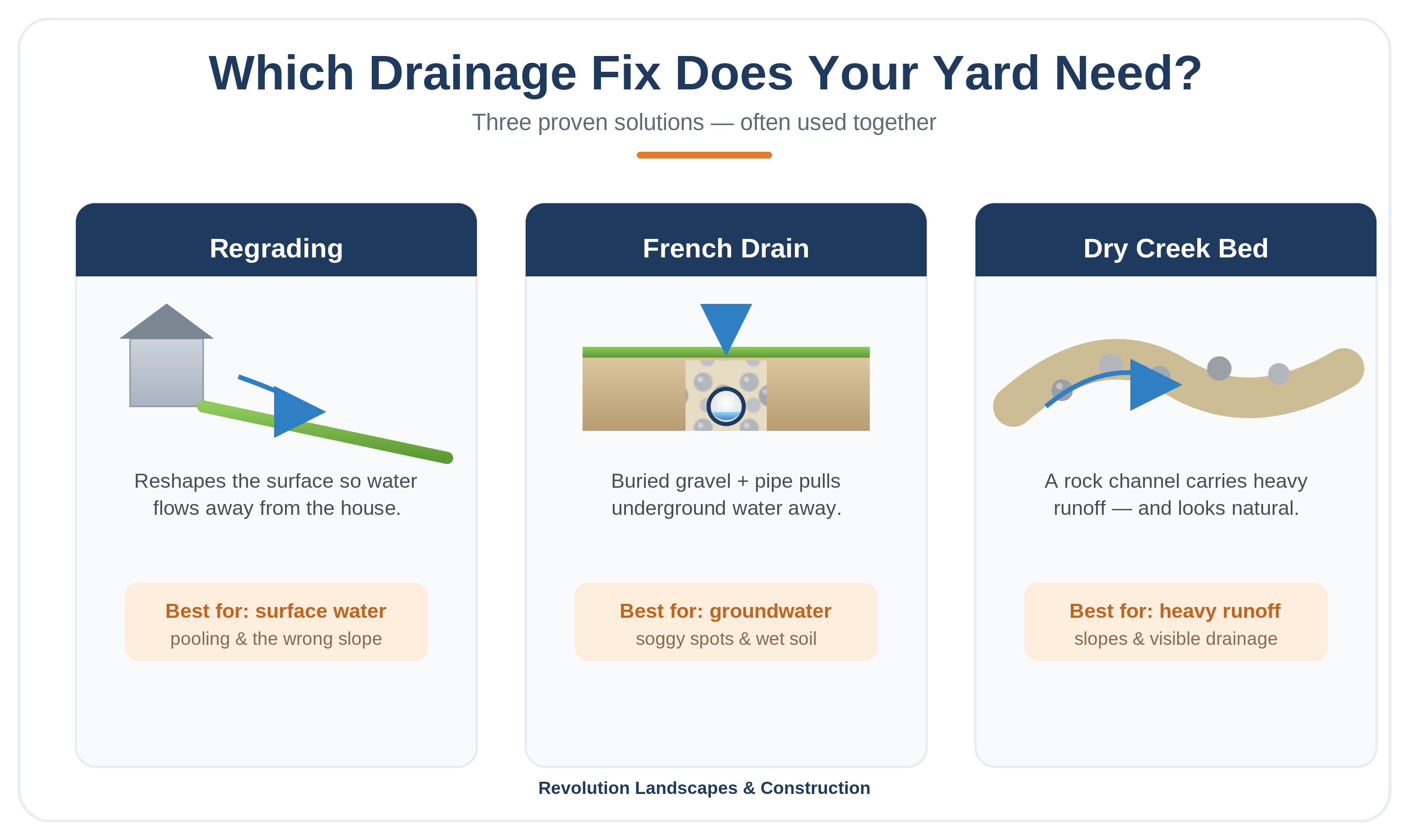
Regrading is all about managing surface water. When it rains, water follows the path of least resistance. If your yard slopes toward your house, or if there are flat spots and depressions, water will pool there instead of running off. Regrading involves reshaping the physical contour of the land. We use equipment to cut down high spots and fill in low spots, creating a gentle, consistent slope that guides surface water away from your foundation and off your property. It doesn't use pipes or gravel — it simply uses gravity to move water over the surface of the ground.
What a French Drain Does
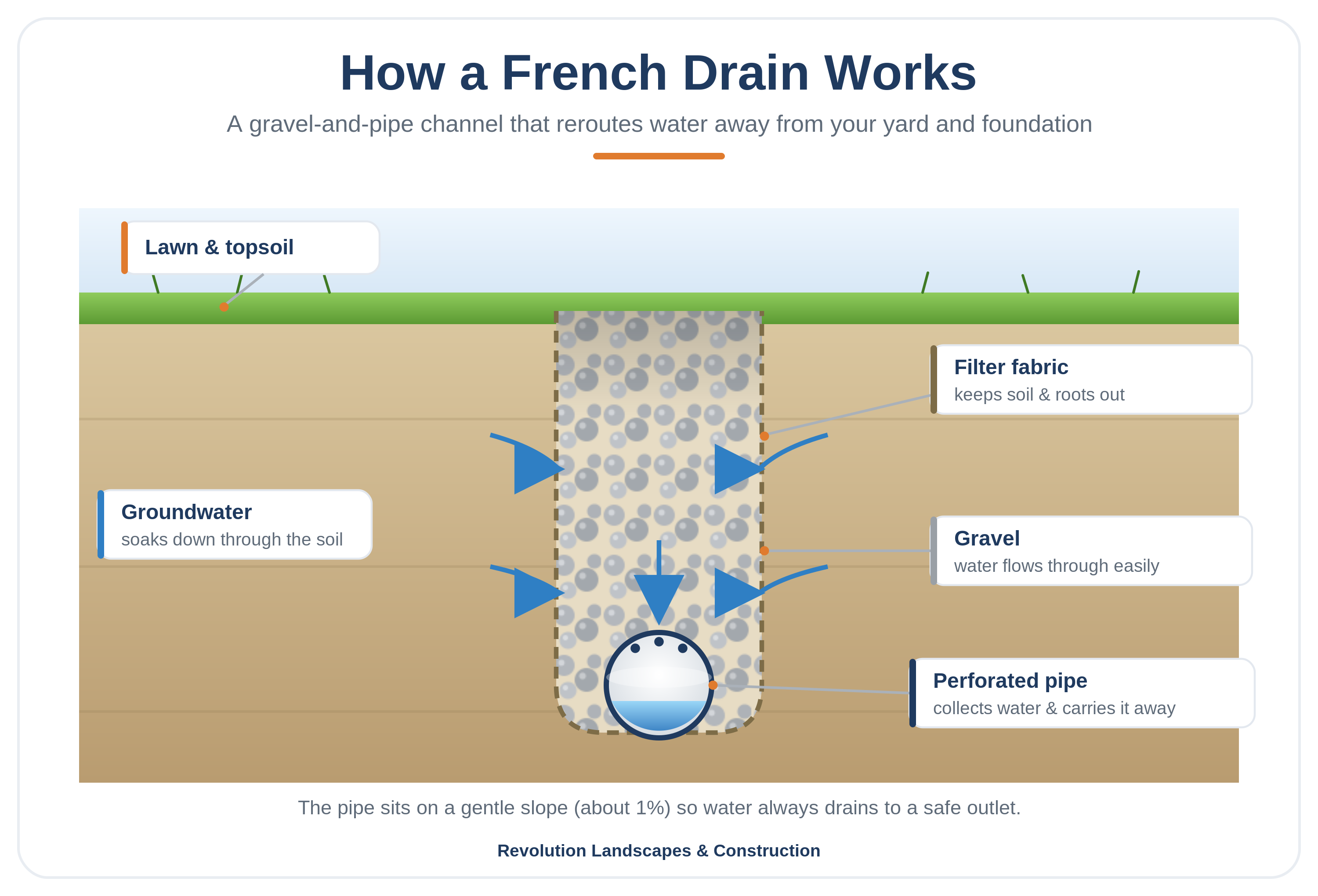
While regrading handles surface water, a French drain is designed to manage subsurface water or groundwater. A French drain is a trench filled with gravel and a perforated pipe, wrapped in filter fabric. It works on the principle that water always seeks the easiest path. As water saturates the soil, it finds the gravel trench, seeps into the perforated pipe, and is quickly channeled away to a safe discharge point. French drains are perfect for areas where water naturally collects underground or where you can't drastically change the surface grade to move the water.
When Regrading Alone Is Enough
Regrading is often the first line of defense and the most straightforward solution when the problem is purely surface runoff. If you have a clear depression where water sits after a storm, or if your flower beds are pitched toward your siding, regrading is usually the answer. As long as there is a lower point on your property (or the street) to direct the water toward, and the soil isn't constantly saturated from an underground spring or high water table, establishing a proper slope is often enough to keep your yard dry and your foundation safe.
When You Need a French Drain
You need a French drain when water is trapped and surface grading isn't feasible or sufficient. For example, if your yard is completely flat and there's nowhere to slope the ground, a French drain provides an artificial channel to move the water. It's also necessary when dealing with hydrostatic pressure — water pushing up from beneath the surface. If you have a constantly soggy spot at the base of a retaining wall or a section of lawn that stays squishy days after a rain because of the heavy Missouri clay, a French drain will pull that trapped moisture out of the soil.
When You Need Both
In many cases, especially on sloped lots or properties with complex water issues, you need a combination of both. Regrading might be used to direct the bulk of the surface runoff away from the house, while a French drain is installed at the bottom of a slope or behind a retaining wall to catch the water that penetrates the soil. When we visit a property for drainage services, particularly in areas like Farmington with tricky clay soils, we look at both surface flow and soil saturation to determine the exact right mix of grading, subsurface drainage, and overall landscape design.
Related Services & Areas
Not sure which you need?
We'll tell you honestly. Get a free assessment and we'll find the right fix for your yard.