Mulch vs. Rock Beds: Which Is Better for Your Missouri Landscape?
It's one of the most common questions we get. Both have their place — here's an honest breakdown so you can choose for your yard and budget.
Mulch: Pros and Cons
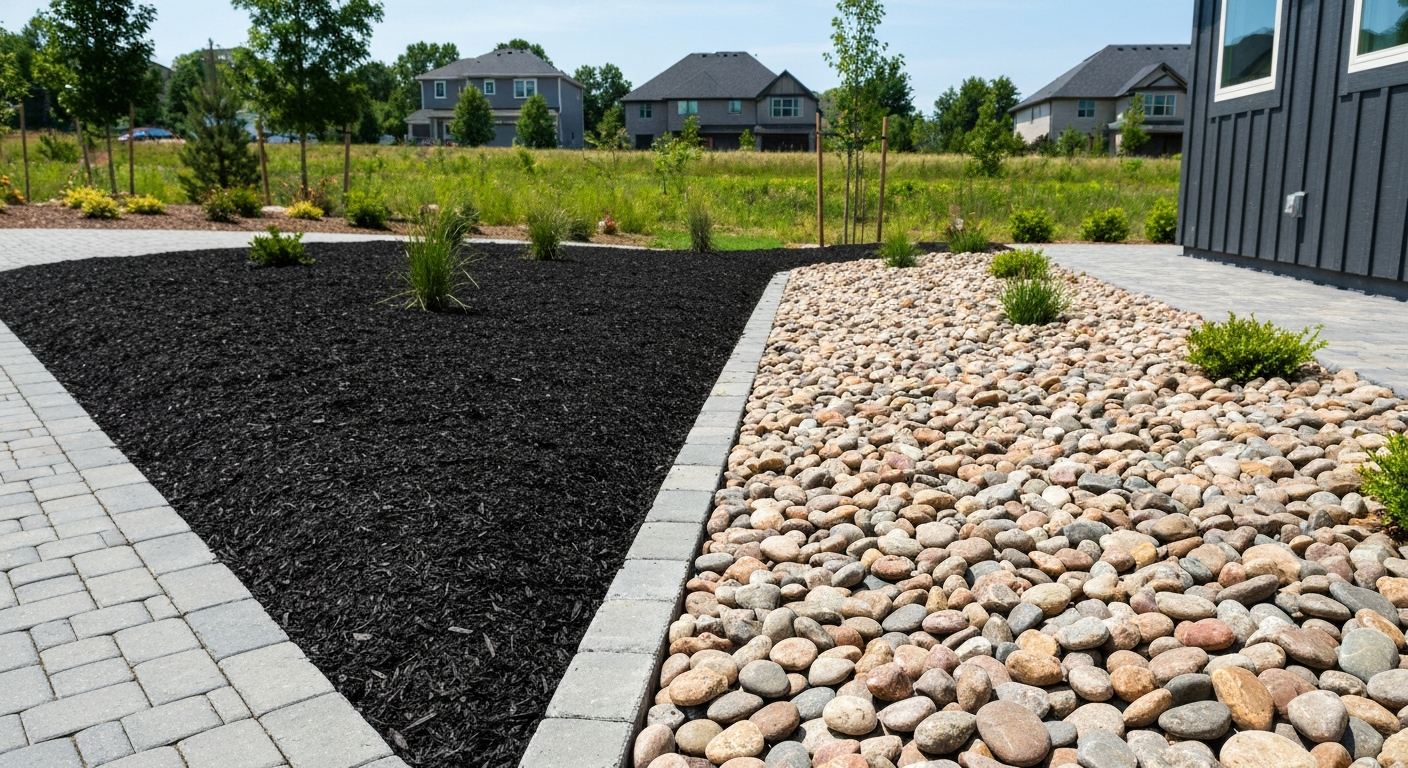
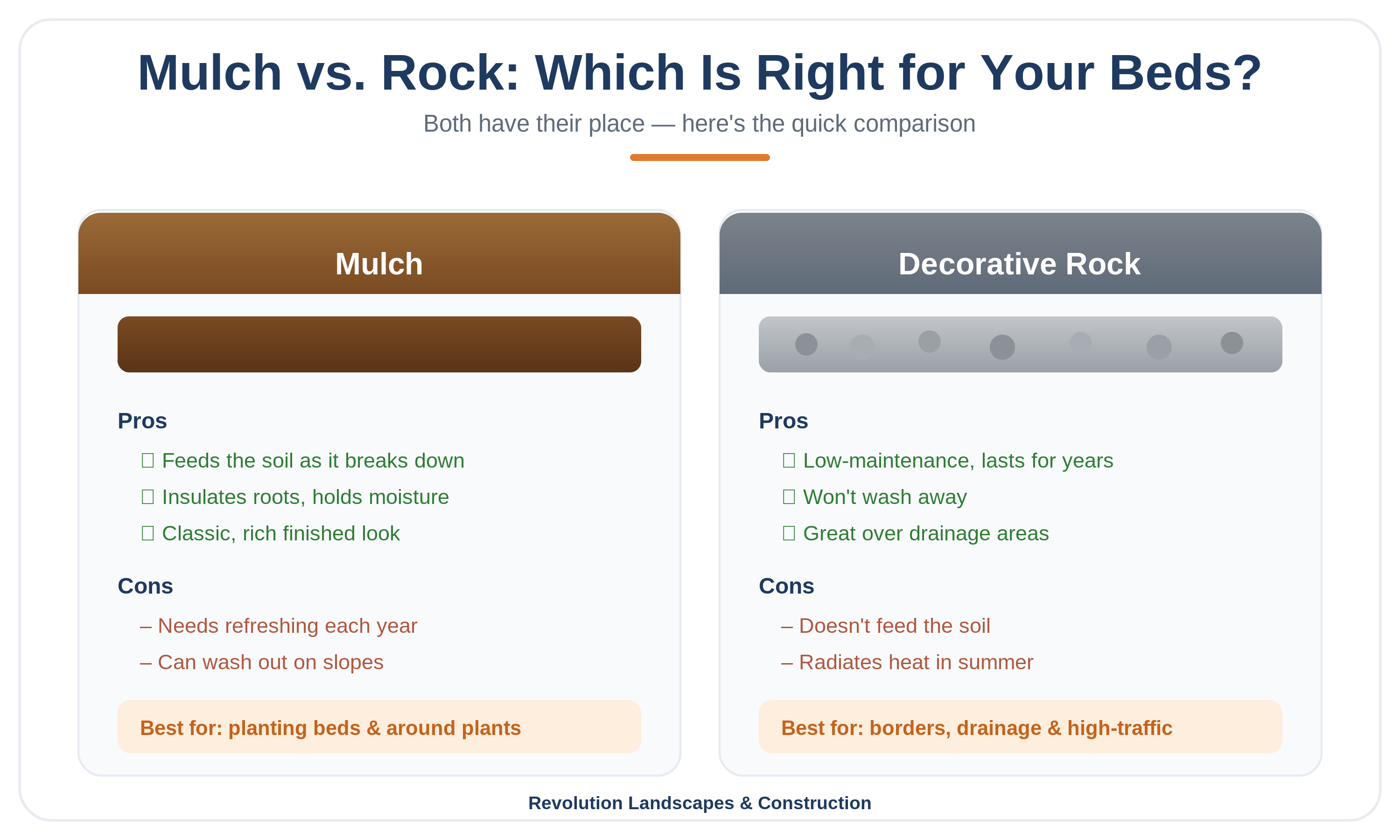
Mulch is the classic choice for a reason. It breaks down over time, which adds organic matter back into the soil — making it the absolute best option for the health of your plants, trees, and shrubs. A fresh layer of dark hardwood mulch also provides an incredible, high-contrast backdrop that makes green foliage and flowers pop. It holds moisture well, insulating roots during our hot Missouri summers and freezing winters. The main drawback? It requires maintenance. Mulch breaks down, fades in the sun, and occasionally washes out in heavy rain, meaning you'll need to refresh it every year to keep the beds looking their best and suppressing weeds effectively.
Rock: Pros and Cons
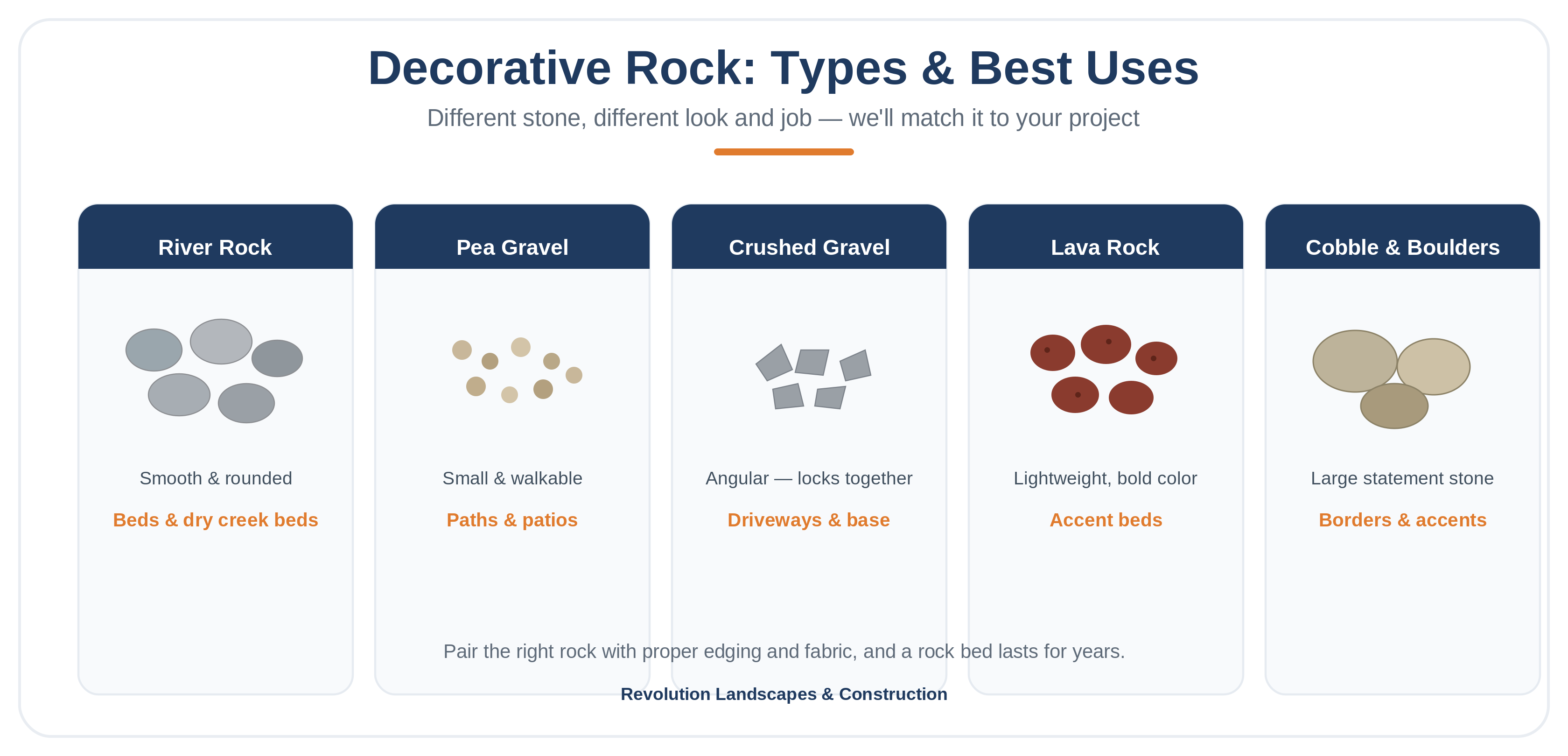
Decorative rock — whether it's river rock, trap rock, or pea gravel — is the ultimate low-maintenance solution. Once it's installed properly over a high-quality commercial weed fabric, it stays put. It doesn't decompose, it doesn't fade, and it won't wash away in a typical downpour. This makes it a fantastic, long-lasting investment. However, rock doesn't feed the soil like mulch does. It also absorbs and radiates heat, which can stress delicate plants during July and August. And while it suppresses weeds well initially, dirt and debris will eventually blow in and settle between the rocks, allowing weeds to sprout if not occasionally blown clean.
Cost Over Time
When comparing costs, you have to look past the initial installation. Mulch is significantly cheaper up front. The material costs less, and it's faster to install. However, because you're paying to have it refreshed annually (or at least every other year), those costs add up over a five- or ten-year period. Decorative rock is an investment. The material is heavier, more expensive, and labor-intensive to install properly with the necessary fabric underlayment. But once it's in, your ongoing costs drop to near zero. Over a decade, rock often ends up being the more cost-effective choice, provided you stay in the home long enough to see the return.
Which to Use Where
You don't have to choose just one — the best landscape designs often use both strategically. We recommend mulch for primary planting beds, around delicate perennials, and anywhere you want to prioritize plant health and vibrant color. Rock is ideal for high-traffic areas, narrow borders alongside the house or foundation, under decks, and in areas prone to heavy water flow where mulch would wash away. Rock is also the go-to material for drainage solutions like dry creek beds or French drain covers where water movement is the primary concern, making proper mulch and rock installation essential.
What We Usually Recommend
At Revolution, we usually recommend a hybrid approach. For a foundation planting bed full of hydrangeas and hostas, we'll suggest a premium hardwood mulch to keep the soil rich and cool. For the border along your driveway or the strip between your landscaping and a neighbor's fence, we'll suggest river rock. We look at your property's drainage, your budget, and how much time you want to spend on maintenance, and we build a plan that makes sense for your specific yard.
Related Services & Areas
Want fresh beds this season?
Get a free estimate and we'll help you choose the right material for your property.