Native Missouri Plants for Farmington Yards
A landscaper's guide to native Missouri plants that thrive in Farmington's zone-6 clay soil — low-water perennials, grasses, shrubs, and trees, plus how to design with them.
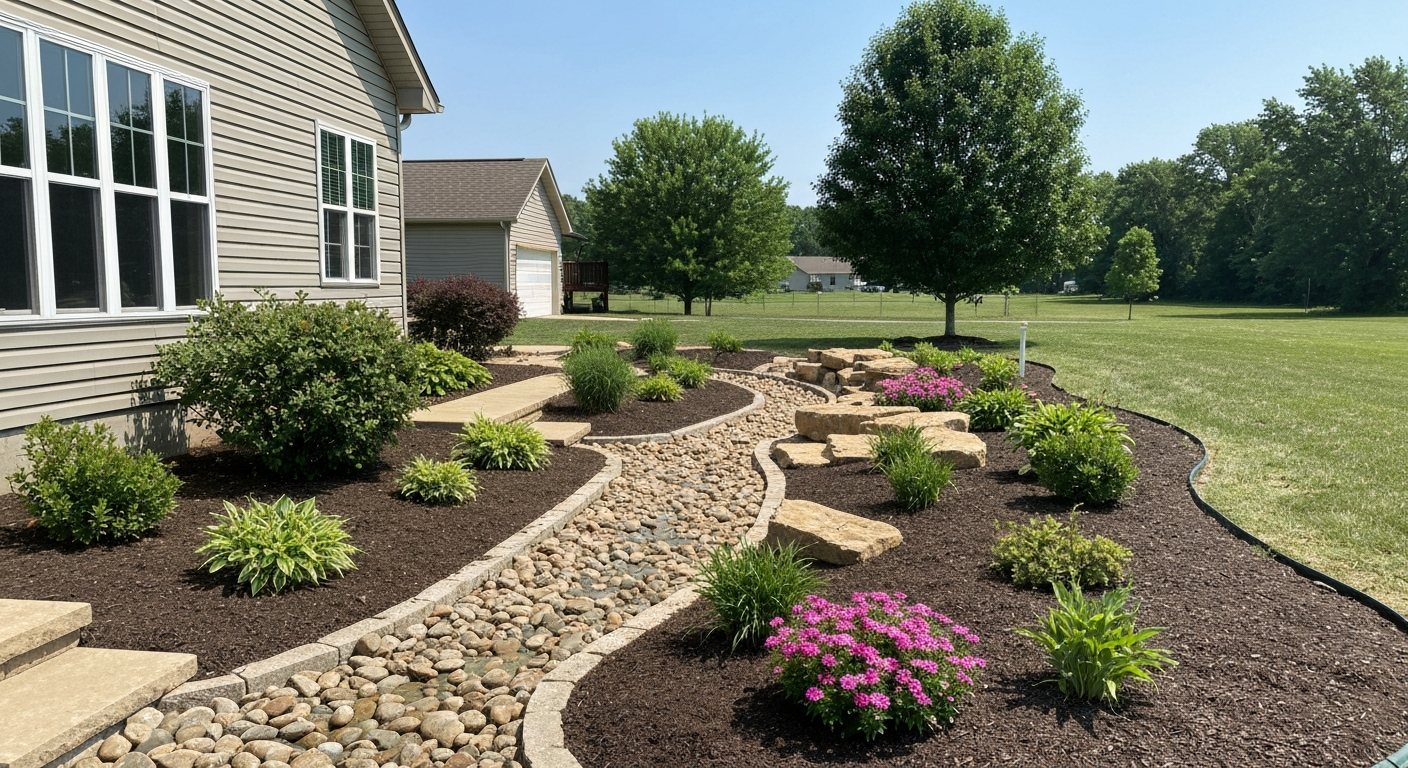
Some of the toughest, best-looking plants for a Farmington landscape are the ones that were already growing here long before any of us showed up. Native Missouri plants are built for our exact conditions — heavy clay soil, hot and humid summers, cold winters, and stretches of drought followed by downpours. Once they're established, they ask for very little: less watering, less fuss, no babying. And they bring the yard to life, pulling in butterflies, bees, and songbirds all season long.
This is the plant palette we reach for again and again on local projects for our landscaping services, and below we'll walk through our favorites by type — plus how to actually design with them so the bed looks intentional, not wild.
Why Native Plants Work So Well Here
Farmington and the rest of St. François County sit in USDA hardiness zone 6 (6a–6b on the 2023 map). That means winter lows can dip well below zero, and our soils tend to be clay-heavy — slow to drain and tough on plants that want loose, sandy ground.
Native plants evolved in exactly this environment, and it shows:
- Deep roots. Many Missouri natives send roots several feet down. That makes them remarkably drought-tolerant once established, and those roots also help rainwater soak in instead of running off — which is a quiet win for yard drainage and erosion control.
- Lower inputs. They generally don't need fertilizer, constant watering, or chemical babysitting. The right native in the right spot largely takes care of itself.
- Wildlife value. Native flowers, grasses, and shrubs feed local pollinators and birds in a way that most imported ornamentals simply can't. (More on that in our pollinator garden guide.)
The catch is matching each plant to the right amount of sun and the right moisture. Get that part right and natives are about as close to "plant it and enjoy it" as landscaping gets.
Native Perennials & Wildflowers
These are the color workhorses — they come back every year and carry the bed from spring through fall.
| Plant | Light | Bloom season | Why we use it |
|---|---|---|---|
| Purple Coneflower | Full to part sun | Summer | Tough, long-blooming, loved by bees and goldfinches |
| Black-Eyed Susan | Full sun | Summer–fall | Cheerful gold, spreads nicely, very forgiving |
| Butterfly Milkweed | Full sun | Early–mid summer | Brilliant orange and a monarch host plant |
| Wild Bergamot / Bee Balm | Sun to part shade | Summer | Lavender blooms, pollinator magnet, fragrant foliage |
| Prairie Blazing Star | Full sun | Mid–late summer | Vertical purple spikes for height and structure |
| Wild Columbine | Part shade | Spring | Early red-and-yellow blooms; hummingbird favorite |
| Cardinal Flower | Part shade, moist | Late summer | Intense red; thrives in the damp spots others hate |
| Foxglove Beardtongue | Sun to part shade | Late spring | Clean white blooms; bridges the spring-to-summer gap |
| Golden Alexanders | Sun to part shade | Spring | Early yellow color; great front-of-bed filler |
| Aromatic Aster | Full sun | Fall | Late purple show when most things are fading |
A good bed mixes several of these so something is always in bloom. Plant in drifts of three, five, or seven rather than singles dotted around — it reads as a designed planting instead of a random collection.
Native Grasses for Texture & Movement
Grasses are the secret ingredient that makes a native bed look polished. They add fine texture, catch the light, and sway in the wind — and they hold their structure into winter.
- Little Bluestem — blue-green in summer, turning a gorgeous coppery russet in fall. Compact and well-behaved.
- Prairie Dropseed — soft, fine-textured mounds with a light fragrance; one of the most refined native grasses.
- Switchgrass — taller and upright; works as a soft screen or a backdrop for shorter flowers.
Native Shrubs for Structure
Shrubs give a planting its "bones" — year-round form that flowers can't provide on their own.
- Ninebark — extremely tough, with peeling bark for winter interest. Comes in green and deep-burgundy leaf varieties.
- Wild Hydrangea — native to our woodlands; white summer blooms in part shade.
- Fragrant Sumac — a low, spreading shrub that's excellent for holding a bank or slope, with fiery fall color.
- New Jersey Tea — compact, with frothy white flowers; happy in lean soil.
- Buttonbush — a pollinator powerhouse for wet, low spots where little else thrives.
- Serviceberry — spring flowers, edible early-summer berries, and standout fall color; works as a large shrub or small tree.
- Spicebush — a shade-tolerant native and host plant for the spicebush swallowtail butterfly.
Native Trees for Shade & Seasonal Color
The right tree is the longest-lasting investment in any yard. These natives earn their place:
- Eastern Redbud — clouds of pink-purple flowers in early spring; a Missouri classic and perfect understory tree.
- Flowering Dogwood — the Missouri state tree, with spring blooms, red berries, and rich fall color (give it some afternoon shade).
- River Birch — beautiful peeling bark and a real workhorse in spots that stay wet.
- Bald Cypress — a deciduous conifer that shrugs off both soggy and dry ground.
- White Oak — a long-lived shade tree and a keystone species for local wildlife.
Designing With Natives
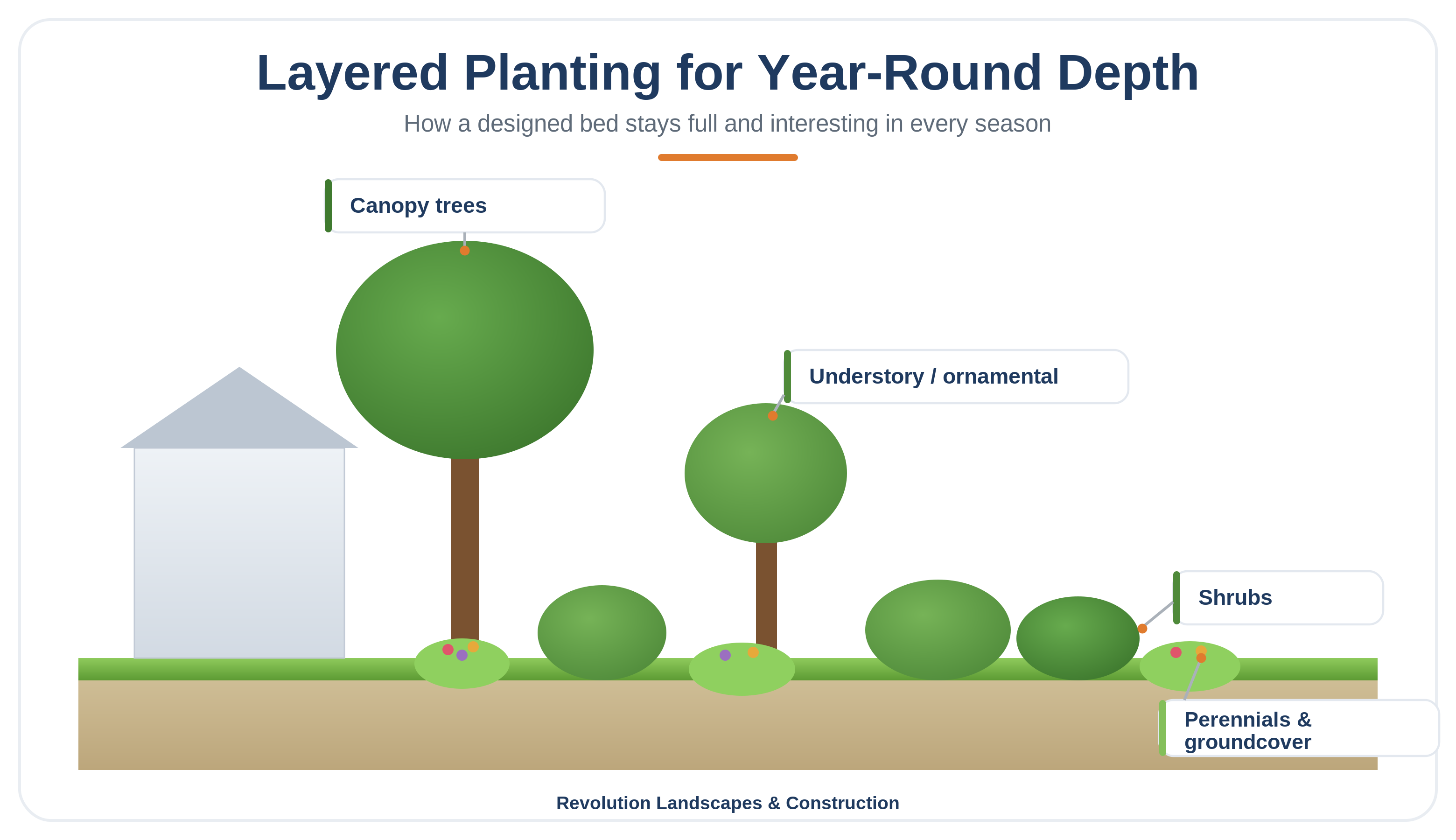
Natives can look spectacular — but only if they're arranged with a plan. The most common mistake we fix is a native bed that was simply scattered, so it grows in looking weedy. A few principles keep it sharp:
- Layer by height. Trees and tall shrubs in back, mid-height perennials and grasses in the middle, low groundcovers and edgers up front.
- Mass in drifts. Repeat the same plant in groups so the eye reads bold blocks of color and texture.
- Stagger bloom times. Combine spring, summer, and fall bloomers so the bed never goes flat.
- Mind the soil and drainage. In heavy clay, either choose clay-tolerant natives or amend the bed first — and route water away from low spots. Our drainage solutions and clay-soil planting guide cover this in depth.
- Finish with the right mulch. A clean 2–3 inch mulch layer keeps roots cool, holds moisture, and suppresses weeds while the planting fills in. See our mulch and rock bed installation options.
This is exactly the kind of planning we handle in landscape design — we map sun and shade, soil and slope, then build a planting plan that looks deliberate from day one and better every year.
A Few Local Tips
- Know your light first. Full sun, part shade, and full shade call for completely different plants. Our sun vs. shade guide walks you through reading your yard.
- Right plant, right place. Don't fight the site. A damp low corner is a gift if you plant cardinal flower and buttonbush instead of something that wants it dry.
- Water through year one. Even drought-tough natives need regular water their first season while roots establish. After that, you can mostly step back.
- Leave the seed heads. Coneflowers, grasses, and asters left standing through winter feed birds and add structure — then cut them back in early spring.
Frequently Asked Questions
Related Services & Areas
Want a low-maintenance, all-native landscape that thrives in our climate?
Revolution Landscapes designs and installs native plantings across Farmington and the surrounding area.