How to Plan a Pollinator Garden in Missouri
A pollinator garden is one of the most rewarding things you can add to a yard. It's alive — bees working the flowers, butterflies drifting through, hummingbirds darting between blooms. It's also genuinely useful: pollinators are under pressure, and a well-planned garden gives them food and habitat right here in Farmington while making your landscape more colorful and lower-maintenance.
The trick is planning. A pollinator garden isn't just "plant some flowers" — it's about keeping something in bloom from spring through fall, choosing the right mix of plants, and arranging them so pollinators can actually find and use them. Here's how we approach it.
The Core Principles
A few rules turn a random flower bed into a pollinator magnet:
- Bloom from spring to frost. Pollinators are active for months, so you want overlapping waves of bloom — early, mid, and late season — so there's always a food source.
- Plant in clumps, not singles. Groups of the same plant (drifts of three, five, or more) are far easier for pollinators to spot and work efficiently than one plant here and there.
- Mix flower shapes and colors. Different pollinators feed differently — flat landing pads for butterflies, tubular flowers for hummingbirds, open daisies for bees. Variety serves them all.
- Include host plants, not just nectar. Butterflies need places to lay eggs and feed their caterpillars. Milkweed for monarchs is the famous example, but there are many.
- Skip the pesticides. Insecticides don't distinguish between pests and pollinators. A diverse, healthy garden largely balances itself.
- Add water and habitat. A shallow water source, some leaf litter, hollow stems left over winter, and a patch of bare ground all give native bees and butterflies places to live — not just eat.
- Sun helps. Most pollinator favorites want full sun. Check your light first with our sun vs. shade guide.
Plants by Season
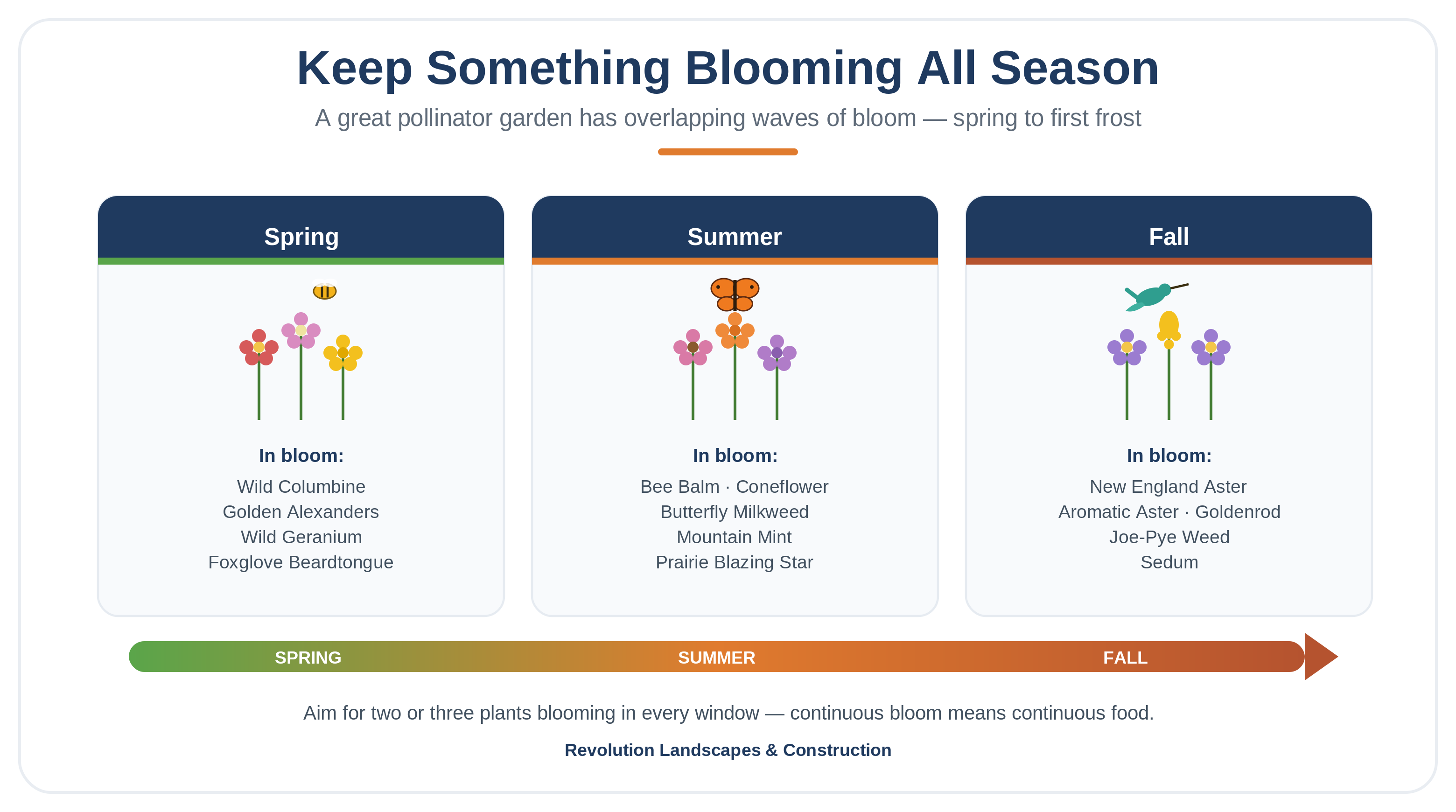
The heart of the plan is bloom succession. Here's a Missouri-native lineup that keeps the garden in flower from the first warm days to the first frost:
| Season | Native plants pollinators love |
|---|---|
| Spring | Wild Columbine, Golden Alexanders, Wild Geranium, Foxglove Beardtongue, plus Redbud and Serviceberry trees |
| Summer | Bee Balm, Purple Coneflower, Butterfly Milkweed, Black-Eyed Susan, Mountain Mint, Prairie Blazing Star, Coreopsis |
| Fall | New England Aster, Aromatic Aster, Goldenrod, Joe-Pye Weed, Sedum |
Aim to have at least two or three things blooming in every window. Layering these the way we cover in our native plants guide keeps the garden looking designed, not wild.
Plants for Specific Pollinators
- Monarch butterflies: Milkweeds are essential — Butterfly Milkweed, Swamp Milkweed, and Common Milkweed are the host plants their caterpillars must have.
- Hummingbirds: Tubular red and orange flowers — Cardinal Flower, Bee Balm, Wild Columbine, and native Trumpet Honeysuckle.
- Native bees: Coneflower, Mountain Mint, Aster, Goldenrod, and almost any open, daisy-style native flower.
- Other butterflies: Spicebush (host for the spicebush swallowtail), native violets, and oaks support more caterpillar species than almost anything else.
A Little Design Goes a Long Way
The most successful pollinator gardens still look intentional. Group plants in drifts, layer by height (tall in back, low in front), repeat colors so the eye flows, and define a clean edge so the bed reads as a garden rather than a meadow gone rogue. Finish with a tidy mulch layer (see our mulch and rock installation service) to hold moisture and keep weeds down while everything fills in.
This is exactly what we plan in landscape design — a pollinator garden that's both ecologically rich and genuinely beautiful, mapped to your yard's sun and soil.
Let Us Build It With You
Whether you want a single pollinator bed or a whole yard designed around wildlife, our landscaping team can plan and install it. We'll choose the right natives for your light and soil, sequence the blooms, and set it up to thrive for years.
Frequently Asked Questions
Related Services & Areas
Want a yard that's alive with bees, butterflies, and hummingbirds?
Revolution Landscapes designs and installs pollinator gardens across the Farmington area.
Request a consultation