Sun vs. Shade: How to Choose the Right Plants
The number one reason a plant struggles isn't bad soil or bad luck — it's the wrong amount of light. A sun-lover stuck in shade grows leggy and refuses to bloom. A shade plant baking in full sun gets scorched, crispy leaves. Match the plant to the light, though, and most of your work is already done.
Here's how to figure out what kind of light your yard actually gets, and a solid plant list for each situation.
First, Read Your Light
"Full sun" has a specific meaning in the plant world. The categories are based on hours of direct sunlight per day:
- Full sun — 6 or more hours of direct sun (most of it midday and afternoon).
- Part sun / part shade — roughly 4 to 6 hours, often morning sun with afternoon shade, or dappled light through trees.
- Full shade — less than about 4 hours of direct sun, or filtered light all day. (True full shade — zero light — won't grow much of anything.)
The easy way to measure it: Pick a sunny day and check the spot every couple of hours from morning to evening — note when it's in direct sun and when it's shaded. Add up the sunny hours. Do this for each area you want to plant, because one yard often has several different light zones.
A few things that trip people up:
- The sun moves with the seasons. A spot that's sunny in July may be shaded in October, and bare-branched trees in spring create more light than they will in summer.
- Morning vs. afternoon sun is not the same. Afternoon sun is hotter and harsher. Some "part shade" plants want morning sun but will burn in late-day sun.
- Walls and pavement create microclimates. A south- or west-facing wall reflects heat and intensifies sun. The north side of the house stays cool and shaded.
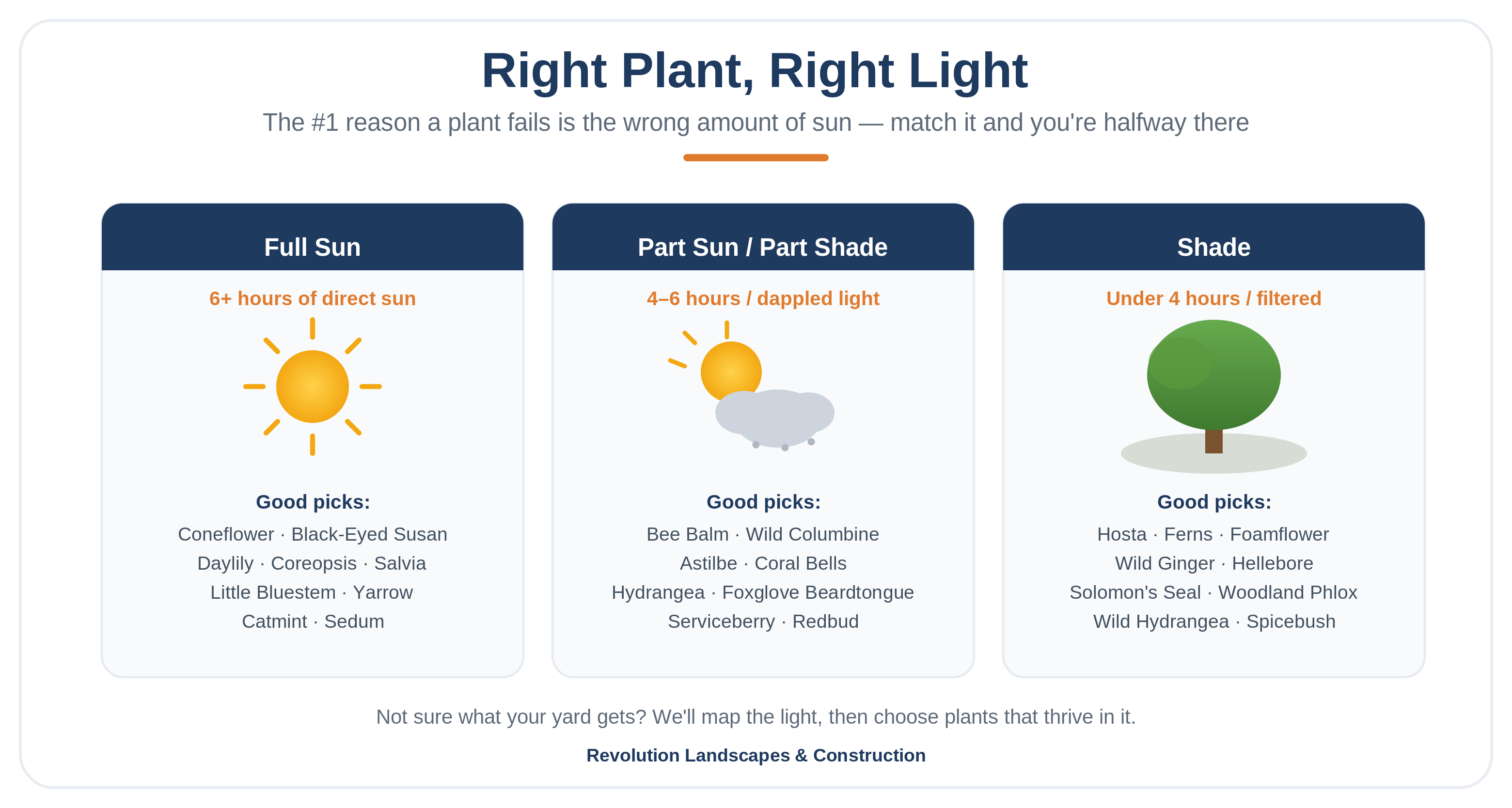
Plants for Full Sun (6+ hours)
These want it bright and hot, and they'll reward you with the heaviest bloom:
| Type | Plants |
|---|---|
| Perennials | Purple Coneflower, Black-Eyed Susan, Daylily, Coreopsis, Salvia, Catmint, Yarrow, Sedum, Butterfly Milkweed |
| Grasses | Little Bluestem, Switchgrass, Prairie Dropseed |
| Shrubs | Ninebark, Panicle Hydrangea, Roses, Spirea |
Plants for Part Sun / Part Shade (4–6 hours)
The most flexible group — happy with morning sun and afternoon relief:
| Type | Plants |
|---|---|
| Perennials | Bee Balm, Garden Phlox, Wild Columbine, Foxglove Beardtongue, Coral Bells, Astilbe |
| Shrubs | Bigleaf & Oakleaf Hydrangea, Viburnum |
| Small trees | Serviceberry, Eastern Redbud, Flowering Dogwood |
Plants for Shade (under 4 hours / dappled)
Shade isn't a limitation — it's a chance to build a lush, woodland-style planting that stays cool and green:
| Type | Plants |
|---|---|
| Perennials | Hosta, Coral Bells, Astilbe, Foamflower, Woodland Phlox, Solomon's Seal, Wild Ginger, Hellebore |
| Ferns | Christmas Fern, Ostrich Fern, Lady Fern |
| Shrubs | Wild Hydrangea, Spicebush |
Don't Forget the Soil and Water
Light is the first filter, but it isn't the only one. Once you know a plant fits your light, check that it also suits your soil and moisture — especially in our heavy clay. Our clay-soil plant guide and native plants guide help you narrow it down, and a clean mulch layer helps in both sun and shade by keeping roots cool and soil evenly moist.
Let Us Map It for You
Reading light, soil, and slope together — then turning that into a planting that looks great year-round — is the heart of landscape design. On a full landscaping project we map every light zone in your yard and choose plants that will thrive exactly where they're planted, so nothing gets scorched or stunted, and we can even add landscape lighting to highlight your new beds at night.
Frequently Asked Questions
Related Services & Areas
Not sure what will grow where?
Revolution Landscapes maps the light and conditions in your yard and designs plantings that thrive.
Request a consultation